I’m Christopher Schwab: British-American, based in Japan,
and for ten years the owner of businesses on the other side of the
world. This is how a constraint turned into a way of working.
If you only read thisI’m British-American, based in Japan. I moved for the woman I married, built four U.S. service businesses, ran them from here, and exited all four.
The proofThe first, Think Maids, started with seven hundred dollars and grew into a national cleaning company, acquired in 2024. I never met a customer.
The agencyInova Local, built alongside it from 2017: the first virtual staffing agency dedicated to home services, and the piece that made the remote local model viable for everyone. Eight years serving companies across North America, including national franchises and Inc. 5000 operators, then acquired by private equity in 2025.
The modelThe remote local business, now standard practice for thousands of home-service operators.
The schoolThe Local Business MBA, since 2018. More than 250 students in sixteen-plus countries.
The practiceUnderneath all of it: Zen practice, and a one-word intention. Simplify.
NowThe Optional Owner: a letter, and a small-group programme for owners who want out of the day to day.
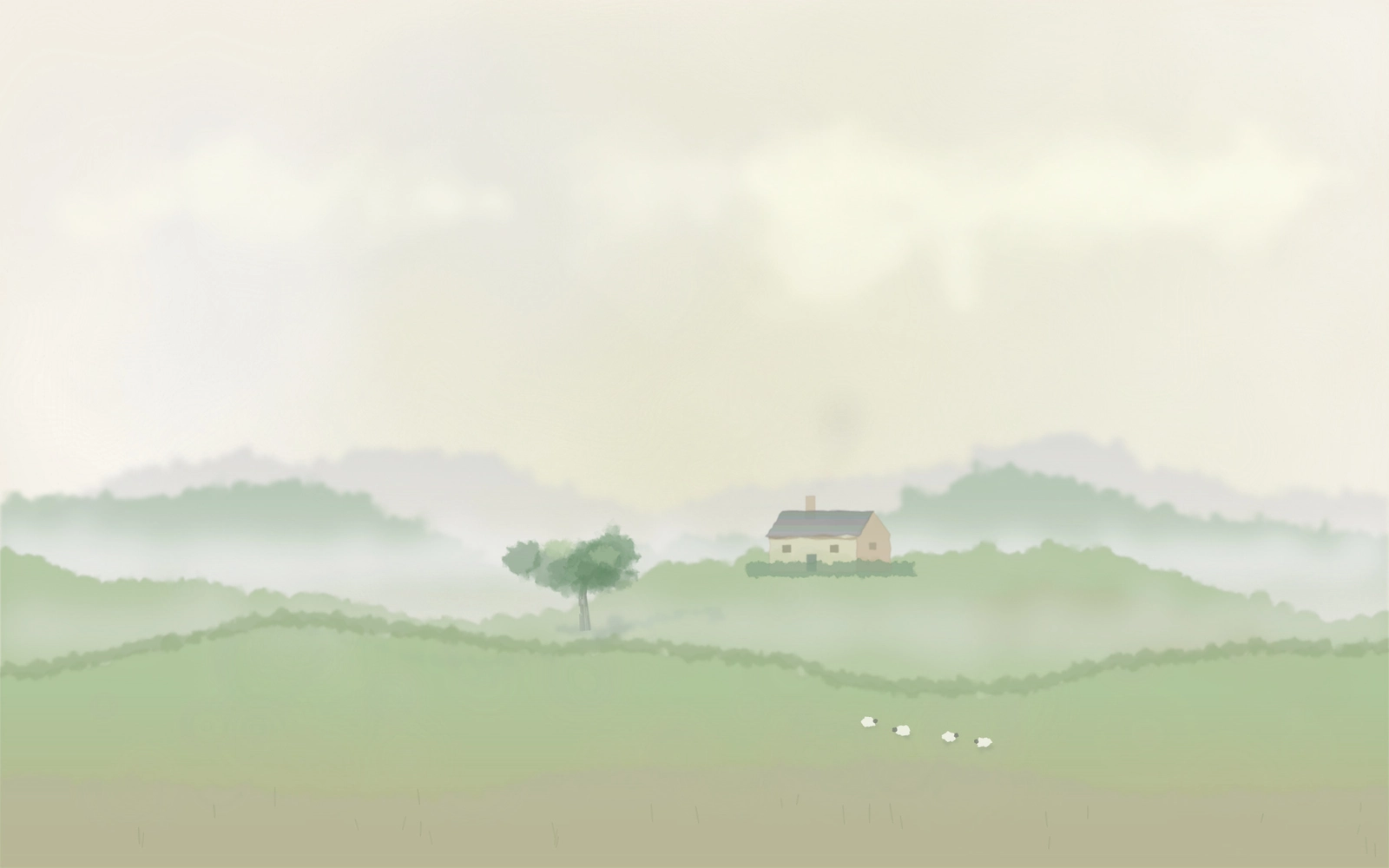
The English countryside · where I grew up
i.
Starting Think Maids
It began with a person. The woman I wanted to build a life with was in Japan, and I was
finishing university in Washington, D.C. Nobody was going to employ
me in America and let me live on the other side of the world, so the
income would have to be built.
I looked at the unglamorous part of the economy: cleaning,
lawn care, junk removal, the ordinary services people need in every
town. The work happens locally, but much of the company does not.
Enquiries, booking, scheduling, follow-up, quality control and hiring
can all be run from a desk anywhere. In my final semester I started a
cleaning company with seven hundred dollars and no industry
experience. What I did have was a useful constraint: I was not going
to be there. Not sometimes. Ever.
Japan · where the business learned to run without me
ii.
Moving abroad, learning to operate
Most service business problems are solved the same way.
The owner appears, absorbs the confusion, and saves the day. That can
feel responsible while teaching the business never to cope without
them. I would not have that option from Japan. So Think Maids was
built as infrastructure rather than a series of rescues: phones
answered by people hired for warmth and trained with documentation;
scheduling, quality control, hiring and payroll each written down,
tested, and handed over.
A few months after graduation I moved to Japan. The
company stayed in Washington while I worked from a desk overlooking a
small Tokyo park. Customers did not know where I was. More
importantly, they did not need to. Think Maids grew into a national
cleaning company, and I never met a customer.
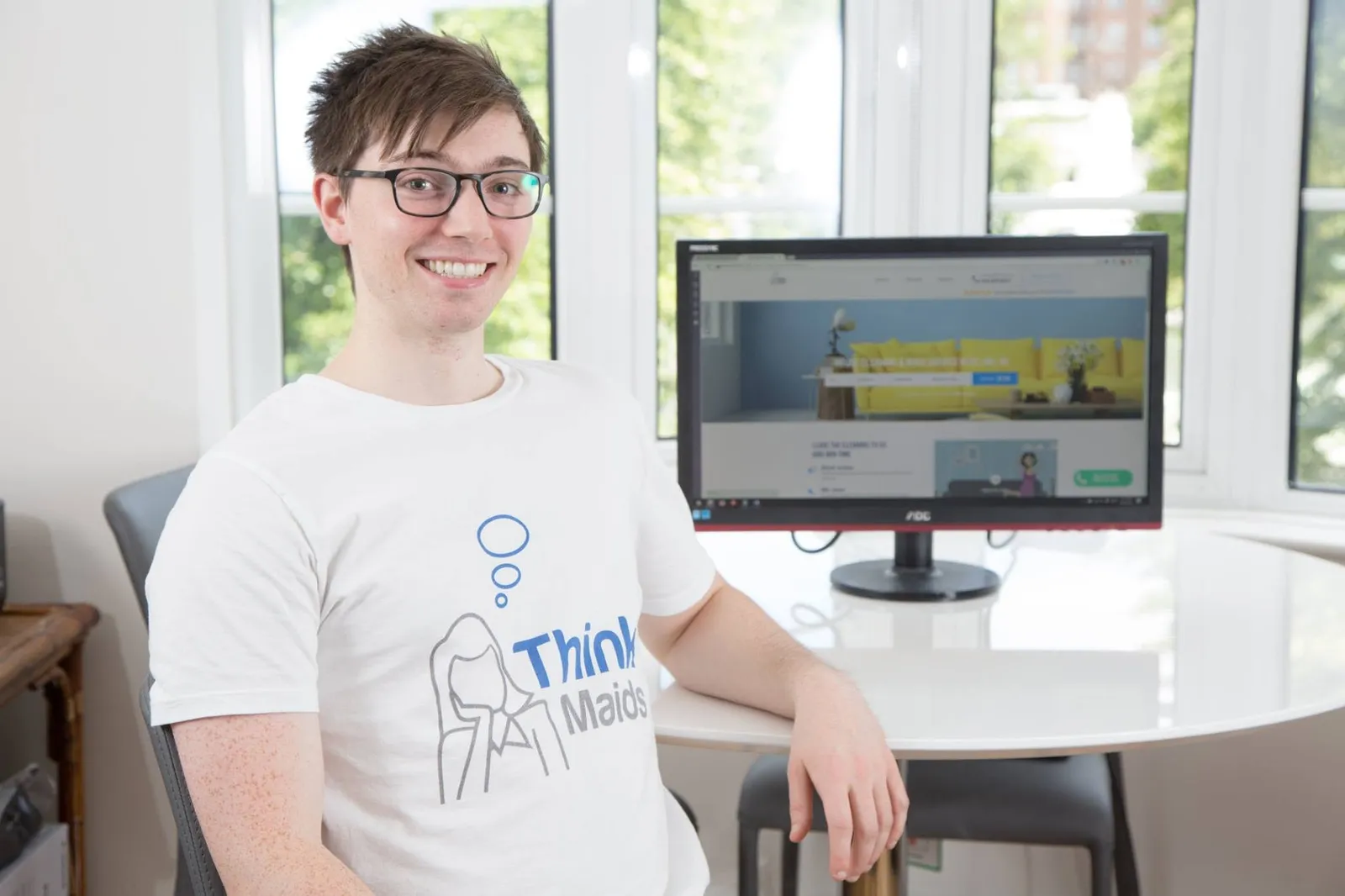
The early days: one t-shirt, and a booking site that answered so I didn’t have to.
“The business that needs you least is the one that serves people best.”
iii.
Building Inova Local
Owners began asking how it worked, then more owners. They
ran into the same wall I had: there was always a category of work
that apparently only the owner could do. On inspection, most of it
was undocumented, poorly bounded, or never genuinely delegated. In
2017 that need became Inova Local, the first virtual staffing agency
dedicated to home services, built from the Think Maids operating team
and run alongside it for the next eight years. It made the remote
local model possible for any owner with a phone number and a
willingness to hand things over. Inova went
on to serve companies across North America, including national
franchises and Inc. 5000 operators, and thousands of operators
now run the model.
In 2018 the work became the Local Business MBA. It began
with a simple question: what would business education look like if
the final project were a company you owned? The programme teaches the
sequence I wish I had understood at the start: choose practical
demand, launch simply, build reliable acquisition, make delivery
repeatable, hire carefully, and gradually remove the owner from
routine decisions. More than 250 students in sixteen-plus countries
have been through it. It also gave me an idea I still use: the
business itself is the course of study.
In 2024 an industry buyer acquired Think Maids, eight years
after I started it and never having seen me on site. The sale
answered a harder question than whether the company could make money:
it showed that the systems, the team and the customer relationships
had value without the founder attached. In 2025 Inova Local was
acquired by private equity. In between, I bought two cleaning
companies in Florida and Texas, put them on the same playbook, and
sold them on within the year. Four exits, none of which required me
in the building.
“The bottleneck was never the work. It was the certainty that nobody else could do it.”
vi.
Becoming a father
Our son arrived this year. It is hard to describe how
quickly that reorganises a person’s sense of what time is for. I had
spent a decade making businesses need me less. The question that
arrived with him was simpler and harder: what was all the building
for?
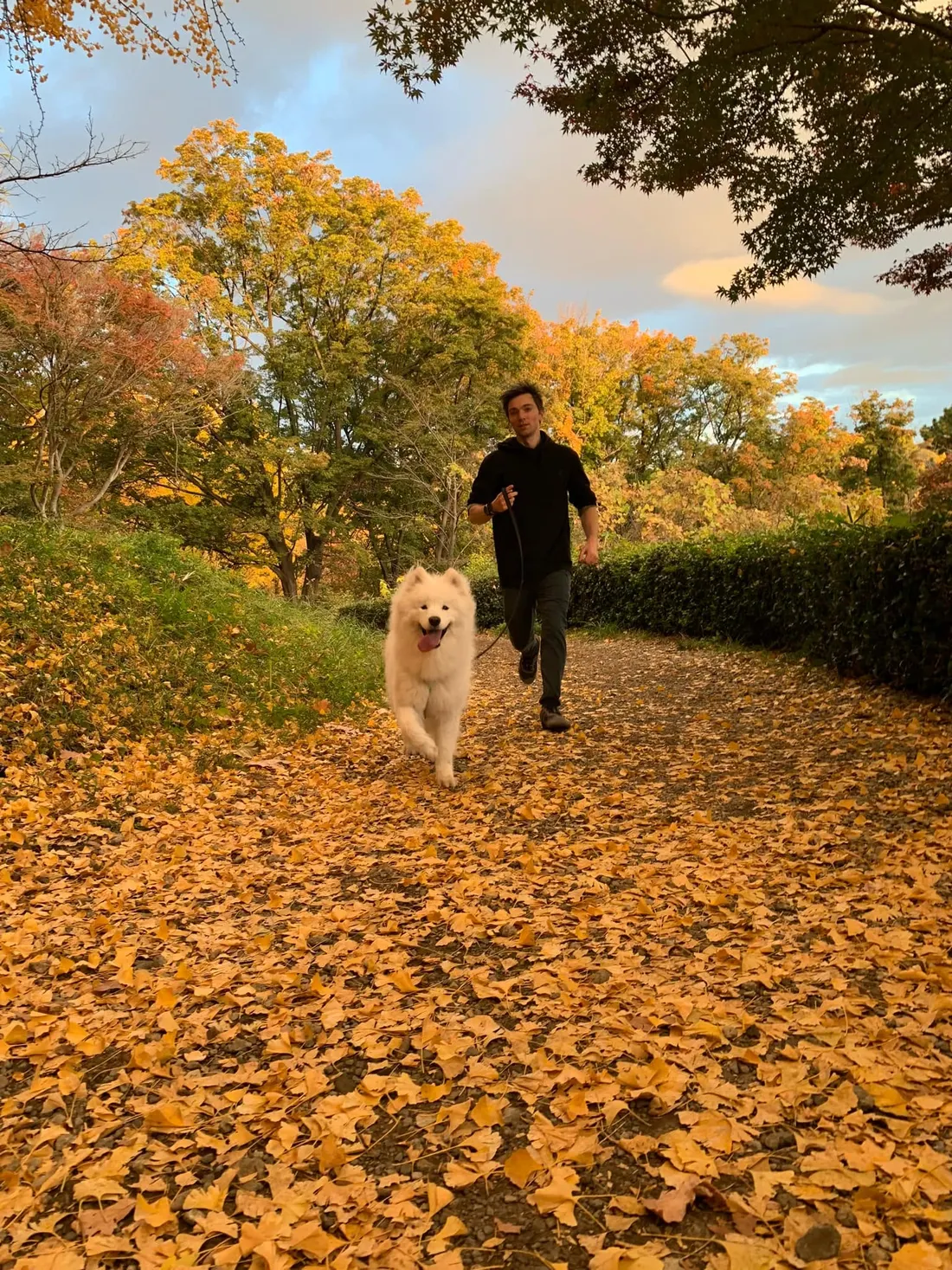
At home, 2026.
vii.
What the building was for
The businesses were never the final point. They were
vehicles for a life, and for work that could be useful to other
people. Alongside them there has always been a Zen practice, which
taught me to distrust unnecessary motion, to notice how tightly I
hold plans, and to simplify before adding. Those lessons showed up in
the companies as fewer priorities, clearer roles, and a willingness
to let other people solve problems differently from me.
Freedom is valuable, but it is incomplete on its own. The
question that follows is what the freedom is for. Family, study,
service, health, creative work, another company, or simply the
ability to meet life with more attention are all good answers. A
business that gives more back than it takes leaves room for them.
viii.
Arriving at The Optional Owner
So this is where a decade landed. The Optional Owner grew
out of the remote local model: first a way to run one company from
another country, then, once the delegation layer existed for
everyone, a broader question about any business. It has widened
since to other kinds of business, with the practical work still
underneath. Most businesses begin
dependent on their owner, and the problem is only when they stay that
way. An Optional Owner moves knowledge, decisions and execution into
systems and people, progressively, until their presence becomes a
choice rather than a requirement. Build it, systemise it and step
back from it, so you can choose where you are useful. That is what I am writing and teaching now, and it is the
thread that runs through everything else on this site.
Think Maids, a cleaning company in Washington, D.C., started with $700 in my final semester.
2017
Removing myself
Moved to Japan. Built the systems and remote team that ran the company without me, and started Inova Local.
2018
Teaching the model
The Local Business MBA: what if business school ended with a business you owned?
2024
Sold Think Maids
After eight years operated from abroad, acquired by an industry buyer. I never met a customer.
2025
Sold Inova Local
The staffing agency, acquired by private equity after eight years.
2026
A different question
Fatherhood, and a decade of building, moved the question from how much can I build to what the business is for.
Now
The Optional Owner
Turning all of it into a cohort and a letter.
The companies
Four businesses, built and let go
Founded 2016 · Acquired 2024
Think Maids
The proof. A Washington, D.C. cleaning company started with seven hundred dollars in my final semester, run from Japan into a national company, sold to an industry buyer.
Founded 2017 · Acquired 2025
Inova Local
The infrastructure. The first virtual staffing agency dedicated to home services, built from the Think Maids operating team so other owners could have the same freedom. Its clients included national franchises and Inc. 5000 operators.
Bought 2023 · Sold 2024
Express Home Maids
The model, applied to someone else’s company. A cleaning business across Florida: bought, put on the playbook, and sold on within the year.
Bought 2023 · Sold 2024
Valet Maids
The same test, run again in Dallas, Texas. Bought, improved, sold: proof the systems work on businesses I did not start.
Along the way
ZenMaid · Top 20 cleaning experts, 2025Maid Summit · headline speaker since 2019Zeta Psi · 40 Under 40, 2020Trainer to MaidThis franchisees
“I tried to run my cleaning company for two weeks while I visited family in Japan. It was hard! The time difference alone was a bear. I admire Chris for being able to do that.”